


Posted on 28 Tháng 4 - 2025
Learn About the GMP Standard Softgel Capsule Manufacturing Process in Detail

Ypharco Healthcare

28.04.2025


What Are Softgel Capsules? Softgel capsules are a dosage form of medicine or dietary supplements where the active ingredients are enclosed in a soft, flexible shell, typically made from gelatin, and combined with plasticizers such as glycerin or sorbitol. Softgel capsules consist of two main parts: the capsule shell and the inner filling (the solution […]
What Are Softgel Capsules?
Softgel capsules are a dosage form of medicine or dietary supplements where the active ingredients are enclosed in a soft, flexible shell, typically made from gelatin, and combined with plasticizers such as glycerin or sorbitol.
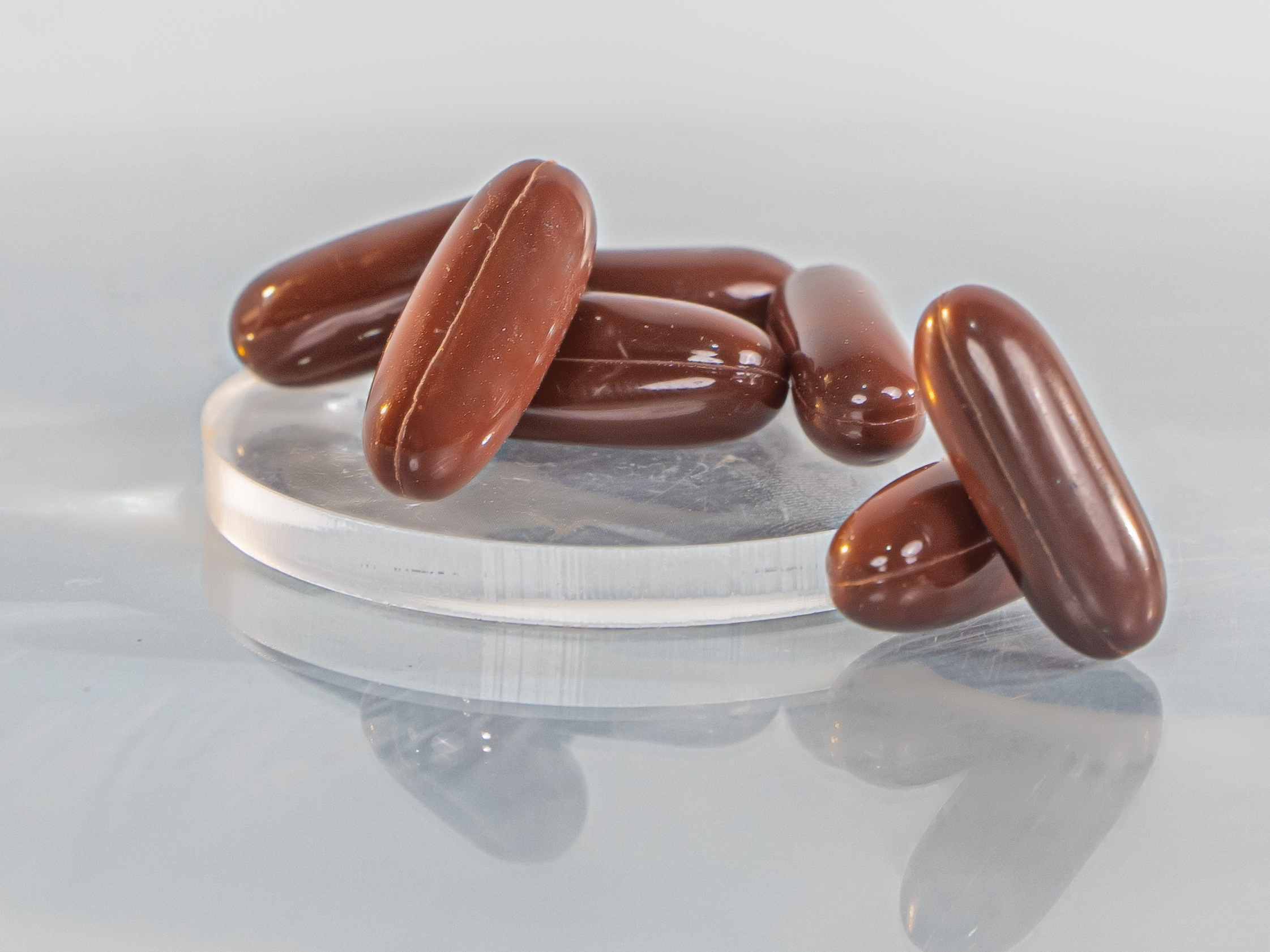
Softgel capsules consist of two main parts: the capsule shell and the inner filling (the solution containing the active ingredients).
- The capsule shell is primarily made of gelatin, combined with plasticizers like glycerin or sorbitol to give it flexibility, softness, and elasticity. Additionally, the shell may contain water, coloring agents, and flavoring agents to enhance aesthetics and improve consumer experience.
- The inner filling is usually a mixture that contains vegetable oils (such as soybean oil or sunflower oil), which act as solvents to dissolve or disperse the active ingredients. Some formulations may also include emulsifiers and other excipients necessary to stabilize the internal liquid structure.
Advantages of Softgel Capsules
Softgel capsules are a popular dosage form today, thanks to their many outstanding benefits, including:
- Easy to swallow and use: With their smooth, soft surface and flexible shape, softgel capsules are especially suitable for both the elderly and young children.
- Fast absorption: The liquid or suspension inside the capsule allows for quicker absorption of the active ingredients into the body compared to solid dosage forms like tablets or hard capsules.
- Masking unpleasant taste: The capsule shell completely encloses the active ingredients, helping to mask any unpleasant taste of the drug.
- Good stability for sensitive ingredients: Softgel capsules protect sensitive ingredients from light, oxygen, or moisture, which helps extend the shelf life of the product.
- Aesthetic appeal: Softgels can be designed in a variety of colors, shapes, and sizes, enhancing the product’s visual appeal and brand recognition.
- Flexibility in formulation: Softgels are suitable for oil-soluble active ingredients and can easily combine multiple components into one capsule.
Softgel Capsule Manufacturing Process
1. Receiving raw materials and packaging at the production workshop:
- Raw materials (including active ingredients and excipients) and packaging are delivered to the company’s warehouse, where they undergo quality control checks. Only materials that meet the required standards are approved for production, based on production orders and material requisition forms. The process is closely supervised by IPC warehouse staff, workshop staff, and warehouse clerks to ensure that the correct quantity and types of materials are provided for production.
2. Mixing Process:
This step involves melting the gelatin (for the capsule shell) and preparing the inner filling (the active ingredients contained within the capsule).
Step 1: Gelatin Melting
- The materials used to make the capsule shell, such as gelatin, sorbitol, glycerin, coloring agents, etc., are placed in a gelatin melting tank at a temperature of 65-75°C, along with purified water. The mixture is continuously stirred under vacuum pressure to create a smooth, uniform liquid without air bubbles and with an appropriate level of viscosity. Afterward, the gelatin solution is filtered through a mesh into a holding tank and allowed to incubate at a temperature of 50-55°C for 15-20 hours.
Step 2: Preparing the Inner Filling
- Beeswax and palm oil are dissolved in a mixing tank using a water bath. The active ingredients are then gradually added to the mixture and stirred thoroughly until a homogeneous liquid mass is formed. This mixture is then passed through a grinding machine to ensure that any insoluble substances do not clump together and are evenly dispersed. After grinding, the inner filling is transferred to a vacuum emulsifier to create a uniform suspension/emulsion, then placed in a holding tank at a temperature of 28-30°C.
Step 3: Capsule Formation
- The gelatin shell and the inner filling are fed into the capsule forming machine. The intermediate tank temperature is set to 50–60°C, the capsule shell temperature to 45–50°C, and the sealing knife temperature to 70–90°C. The shell thickness is set between 0.78 – 0.82 mm, and the sealing force is 200–300 N. The rotation time of the drying drum and capsule wiping time is 5 minutes. The machine is then operated to form and dry the capsules.
- This step requires the capsules to have the correct weight, with sealed edges that are not open, and the shell thickness must neither be too thin nor too thick.
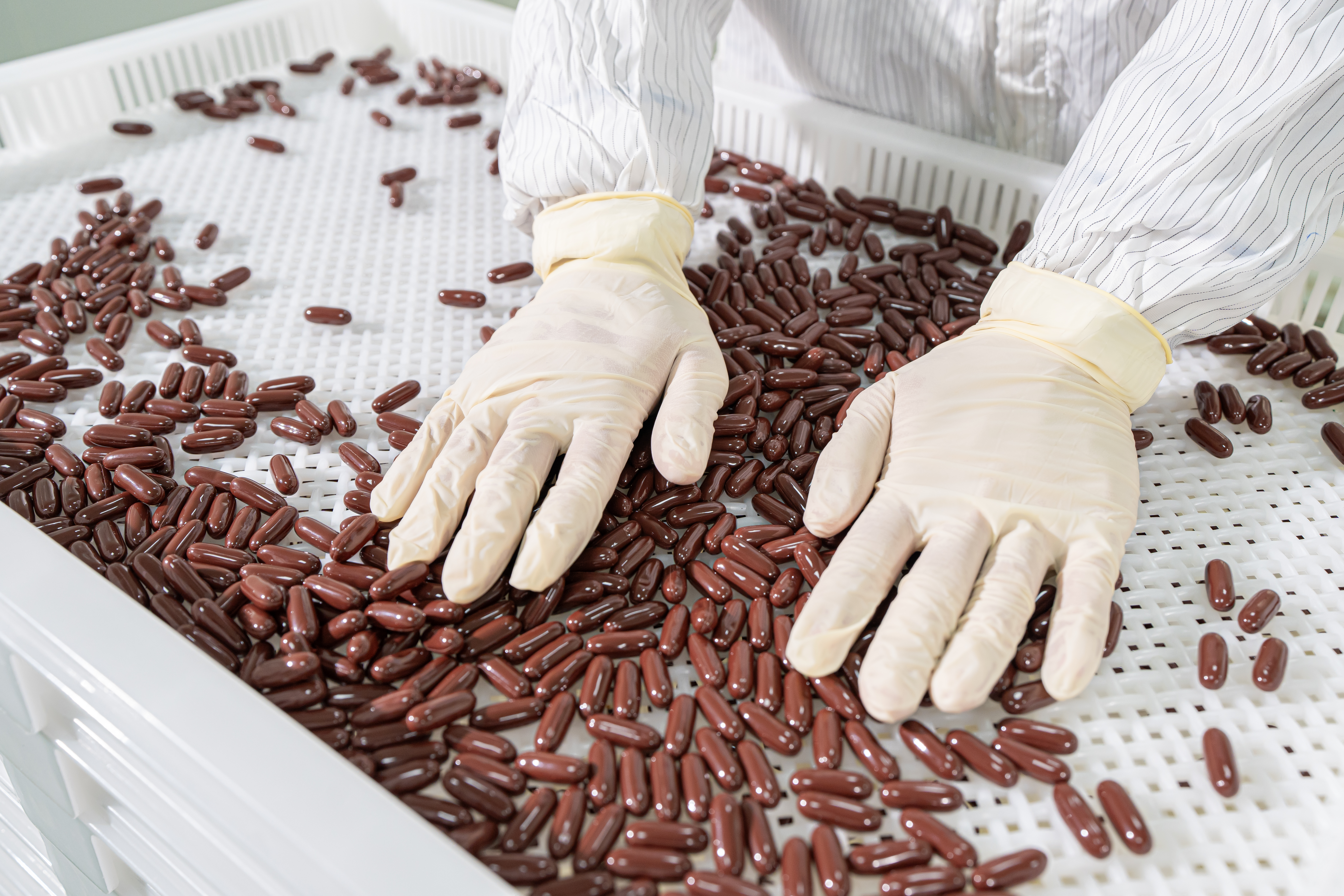
Step 4: Capsules that are output from the drying drum are spread out on drying trays and transferred to a cold drying room. The capsules are dried at a temperature of 20°C and a humidity level below 20% for a minimum of 48 hours. After this, the capsules are collected and moved to the storage room, awaiting packaging.
Step 5: Primary Packaging:
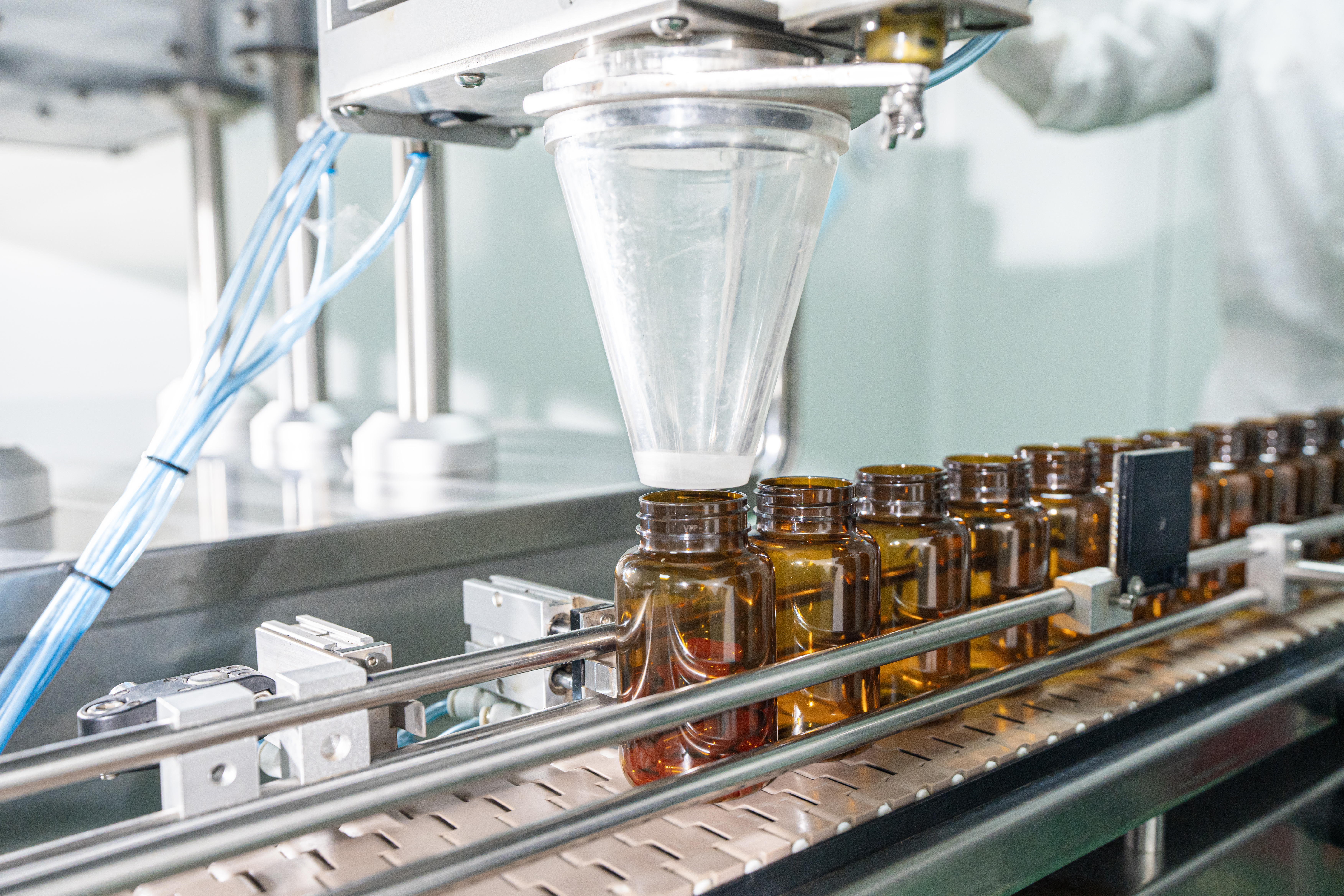
- If the product requires bottle packaging, the capsules are transferred to the counting conveyor, where they are counted, sealed with a foil seal, and the caps are screwed on.
- If the product requires blister packaging, the capsules are transferred to the blister packaging machine.
3. Secondary Packaging
- Labeling: The labels are applied to the bottles.
- Printing batch information: Batch numbers and expiration dates are printed on the boxes and on the carton labels.
- Product packaging: Bottles or blisters, along with the instruction leaflet, are placed into the box. The box is then sealed with a lid and a tamper-evident seal.
- Shrink-wrapping: The box is shrink-wrapped and then placed into cartons.
- Finished product storage: The finished products are stored in the designated area.
4. Product Shipment
The finished products are only shipped from the production workshop to the company warehouse once they have passed quality control and met the required standards.
Contact consultant
We will contact you as soon as possible